
Course Website Structure and Design
Organizing Course Content with Modules
In Canvas, course content is often organized into modules, which can represent weeks, units, or other parts of the course. Modules can contain readings, lectures, assignments, discussions, links, files, and other course materials. A clear module structure helps students find content quickly, understand what to do, and keep track of the course.
Good Practice
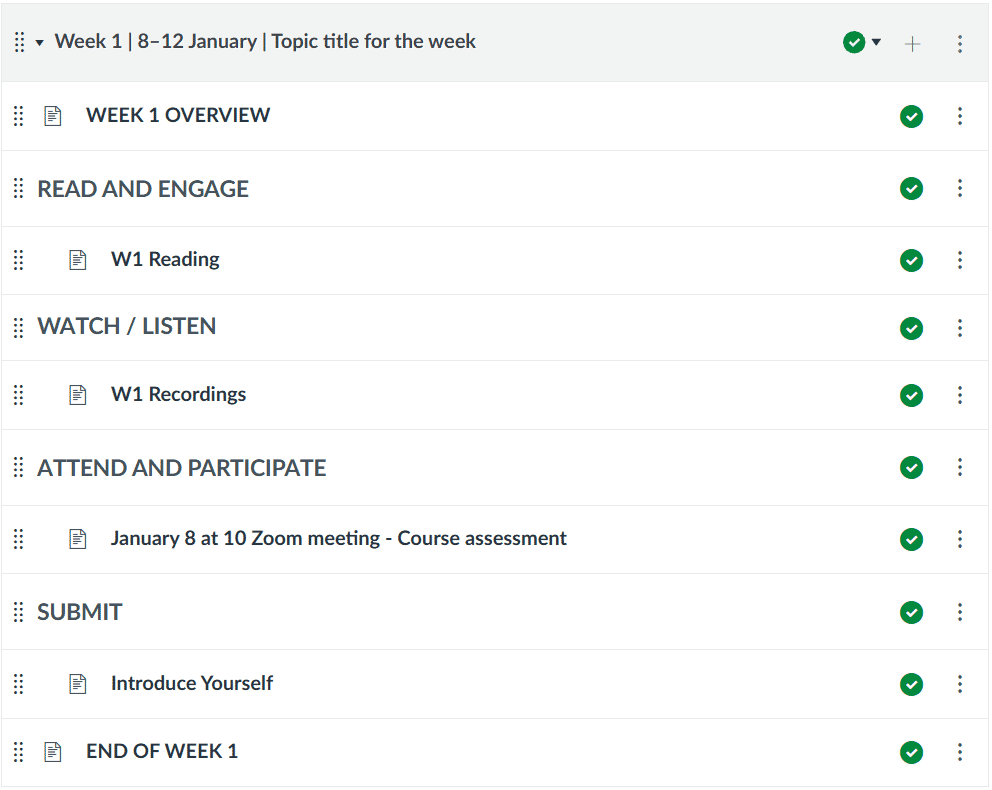
- Structure: Use a clear and consistent structure, for example by organizing content by week or topic.
- Module titles: Give modules and items short, descriptive titles, and use a consistent naming pattern where possible. For example, module titles can begin with the dates followed by the topic title.
- Order of content: Keep the order consistent across modules. For example, each module might begin with an overview, followed by readings or lectures, and then assignments, discussions, or quizzes.
- Headings within modules: Consistent headings within modules also make the course easier to scan.
- Content-heavy modules: If a module becomes long and content-heavy, consider organizing part of the material on pages instead. For example, weekly readings can be collected on one page to reduce scrolling and make the module easier to navigate.
Useful features
Students can expand or collapse modules as needed, while teachers can reorder modules and move content between them. Modules can also be used to guide students through the course by setting requirements and prerequisites, such as completing one module before the next becomes available. See also Mastery Paths.
Recommended
- Organize content in modules by week, topic, or unit.
- Use short, clear, and consistent module titles.
Example: 1–7 January | What Is Active Learning? - Keep content in the same or a similar order across modules.
- Use clear headings within modules.
- Use pages to organize long or content-heavy sections.
- Use indentation when it helps clarify structure.